Branding is more than a logo. Five simple decisions that shape how your small business looks, sounds and feels, whether you’re in Toronto or Kandy.
Most small business owners start branding in the wrong place. They open a design tool, hunt for a nice-looking logo, and wonder why, six months later, the business still feels like a collection of random bits.
A logo is the signature at the bottom. The painting comes first. Here are the five decisions we’d make with you before anyone opens a design file, and the reason each one matters. You can do all of this with a notebook and a coffee.
What branding actually is
Your brand is what people think and say about you when you’re not in the room. You don’t fully control that. What you do control is everything that feeds it: how your business looks, how it sounds, how you treat people, and how consistently you show up.
That’s why branding isn’t just a logo. It’s a set of choices, made once, then repeated everywhere. The choices below are the ones that do most of the work.
Decision 1: Who is this for?
Not “everyone”. Everyone is nobody.
Picture one real kind of customer, a type of person with a type of problem. A busy parent who needs dinner solved on a Tuesday. A new restaurant owner who needs a website before opening day. A shop in a small town that needs more people to know it’s there.
Write two sentences about them: who they are and what they’re trying to get done. Everything else in your brand gets easier to decide when you can ask, “Would that make sense to this person?”
A good side effect: a brand that clearly speaks to someone usually puts off someone else. That’s healthy. It means you’re being specific.
Decision 2: What do you want to be known for?
If a happy customer described you to a friend in one sentence, what would you want them to say? “They’re the quickest.” “They make everything by hand.” “They actually pick up the phone.” “They explain things so you understand.”
Pick one thing. Maybe two. A brand that tries to be known for six things is known for none of them.
This also needs to be true. Choose something you can really deliver on every day, because the brand only works if the customer’s experience matches the promise.
Decision 3: Why should they believe you?
Anyone can say “quality” and “service”. What’s the proof?
- Years in business, if it’s a fact you can state.
- A process you follow that others skip.
- Real work you can show, with permission from the people involved.
- Honest reviews from real customers.
- A guarantee you actually stand behind. (Only offer one you’re sure you can keep.)
Make a short list. These are the things your website, social posts and sales conversations come back to, again and again.
Decision 4: How do you sound?
Voice is the most underrated part of branding, and it costs nothing. Read your last three messages to customers out loud. Do they sound like one person? Do they sound like you?
Choose three words for your voice, and one word for what it isn’t. For example: warm, direct, a little cheeky, not stuffy. Then write like that on your website, in your emails, on your packaging and in your replies to comments.
The best test is simple: would you say this to a customer standing in front of you? If not, rewrite it.
Decision 5: How will you look, and where will it show up?
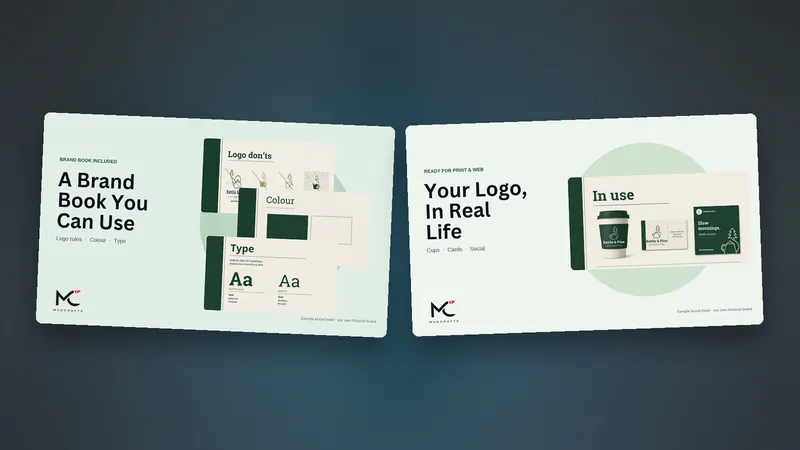
Only now do you get to the visual side: logo, colours, fonts, photos, the feel of your packaging or sign. Because you’ve already decided who it’s for, what you’re known for and how you sound, these choices stop being guesses. They become answers.
A few practical thoughts:
- Think about where it will actually appear. A shop sign, a phone screen, a delivery box, a WhatsApp profile picture, an invoice. Test the logo at the smallest and largest size you’ll need.
- Choose fewer things. One or two main colours, one or two fonts, one style of photography. Consistency beats variety.
- Write it down. Even a single page with your logo versions, colours, fonts and the three voice words keeps everyone, including future you, on the same page.
If you want more on what goes into the visual side, our post on brand identity basics breaks down what’s in a brand kit.
A quick worked example (invented, for illustration)
Imagine a small bakery. It’s invented; it’s not a client.
- Who for: Busy neighbours who want something fresh without a trip across town.
- Known for: Bread baked this morning, every morning.
- Why believe us: The bakers’ names are on the shelf, and the oven is visible from the street.
- Voice: Friendly, down-to-earth, a bit of humour. Not fancy.
- Look: Warm colours, a simple wordmark that reads from across the road, real photos of the actual bread.
Notice how many design decisions just fell out of the first four answers. That’s how it’s supposed to work.
Branding when you’re in more than one place
Many of the businesses we talk to sell across borders, or across communities: a shop in Canada with customers in Sri Lanka, a UK business with family abroad, an online store that ships worldwide. The same five decisions apply. Just add one check: does your brand land the way you mean it in every place you operate? Colours, images and phrases can carry different meanings in different places, so it’s worth asking a few local customers what they think.
Make it real before you make it pretty
Before you spend anything on design, test your answers:
- Say your “known for” sentence to three customers. Does it match what they’d say?
- Show your voice words to a friend who knows the business. Do they recognize you?
- Look at your last five social posts. Would a stranger understand who it’s for?
If the answers don’t fit, adjust the decisions, not just the colours.
Protect what you build
Once your name and logo are settled, it’s worth checking they aren’t already taken in your field. In Canada, the Canadian Intellectual Property Office lets you search trademarks, and WIPO’s Global Brand Database covers international trademarks and records from participating national offices. WIPO itself notes it may be prudent to search national registers too, or consult a trademark attorney. We’re designers, not lawyers, so treat this as a prompt to check and get proper advice before you print a thousand business cards.
Where we come in
These five decisions are the heart of what we call brand strategy, and we love doing it with business owners. We start with your customers and your goals, then craft the identity that carries them: the logo, the look, the templates and the voice. Have a look at our brand strategy and logo and brand identity services, and at how we turn the result into print, packaging and social designs.
Next step
Not sure where your business stands on these five? Tell us what you do or ask Muddy in the chat on this page. We’ll help you find the answers first, and the pretty bits second.
Questions people ask
How do I start branding my small business?
Start before the logo. Make five decisions first: who the business is for, what you want to be known for, why people should believe you, how you sound, and only then how you will look and where it will show up. You can do all of this with a notebook and a coffee. The visual choices then stop being guesses and become answers.
Is branding just a logo for a small business?
No. Your brand is what people think and say about you when you are not in the room. You do not fully control that, but you do control what feeds it: how your business looks, how it sounds, how you treat people and how consistently you show up. Branding is a set of choices, made once, then repeated everywhere. The logo is the signature at the bottom.
How do I find the right voice for my brand?
Read your last three messages to customers out loud and ask whether they sound like one person, and like you. Choose three words for your voice and one word for what it is not, then write like that on your website, in your emails, on your packaging and in replies to comments. The test is simple: would you say this to a customer standing in front of you?
How do I check if my business name is already taken?
Once your name and logo are settled, check they are not already taken in your field. In Canada, the Canadian Intellectual Property Office lets you search trademarks, and WIPO’s Global Brand Database covers international trademarks and records from participating national offices. WIPO itself notes it may be prudent to search national registers too, or consult a trademark attorney. Get proper advice before you print anything.
Sources
- Canadian Intellectual Property Office ised-isde.canada.ca
- Global Brand Database wipo.int
Links opened and read on 14 November 2026.